



Amid a complex period in Israel, against the backdrop of the “Swords of Iron” war, Ariel Kaminsky (28) made a decision many would question, leaving her life in New York City to immigrate to Israel on her own. Here, far from the familiarity of home, she found not only a fresh start, but also a supportive community on the rugby field as part of the Jerusalem Lionesses.
On the surface, the move may seem to defy logic. Yet her love for the country, the meaningful life she has built in Israel, and the strong sense of sisterhood within her rugby team led her to realize that it was “the best decision I’ve ever made.”
Ariel Kaminsky immigrated to Israel from New York City in July 2024, less than a year after the events of October 7 and in the midst of the “Swords of Iron” war. Although rugby is now an integral part of her life, just two years ago she was far removed from the sport. “I was really into cycling. I had barely heard of rugby when I moved to Israel, and I had never really seen how it was played.”
In New York, Ariel lived near her family, had completed her master’s degree, and held a stable job. Yet deep down, she always felt something was missing. “I always felt more connected to Israel than to America, and I struggled with many aspects of life in New York City. I realized I needed to make a change, one that would allow me to live a more meaningful life.”
“Life in America, especially in New York City, is much easier than life in Israel in many ways. On paper, it does not really make sense to move to the other side of the world, far from everyone you know, to a country that operates in a different language during an active war. But I promised myself I would go for at least a year and then reassess.”
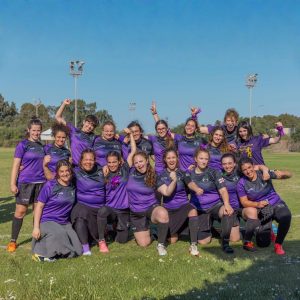
Ariel arrived in Israel alone, without speaking the language and without her bicycle. “I needed to find something new to train for, and that is how I kind of fell into rugby. Now I have an incredible group of women who are an amazing support system, my Hebrew is strong enough to work as a social worker, and I know most of the rules of rugby, which is a much bigger achievement than the other two,” she says with a laugh.
The beginning was not easy, navigating bureaucracy, a new culture, and unfamiliar surroundings, but today, more than a year and a half later, she is certain. “It is the best decision I have ever made. The moment I arrived in Israel, I realized I would never move back to America.”